Discordianism Decompiled · Book Ten · Chapter 2 of 10
The Afterword That Comes Before the Ending
THE AFTERWORD THAT COMES BEFORE THE ENDING
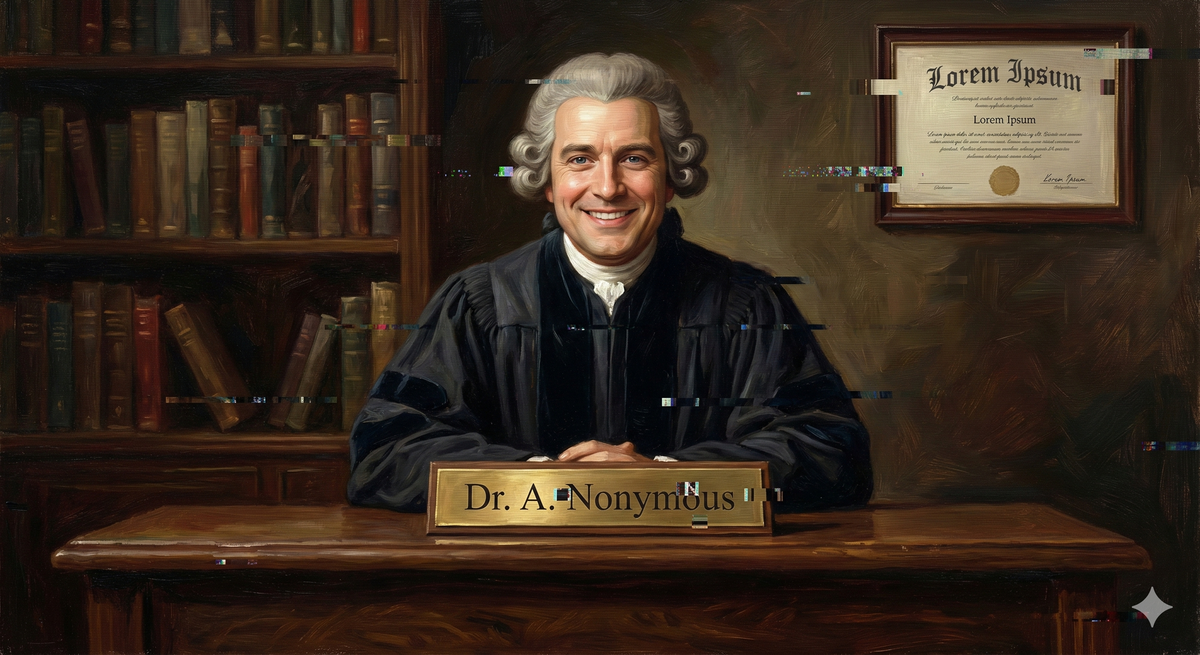
Scholarly Review of Discordianism Decompiled
University of Wherever (Closed 1827)
Having thoroughly examined this text (I skimmed page 27 and the table of contents), I can confidently say (I cannot) that this represents an important contribution to (I genuinely don't know what this is) modern spirituality (is it spirituality? is it satire? is it both? help).
The authors have succeeded in (what exactly did they succeed in?) creating a comprehensive guide (comprehensive to what?) that speaks to (someone, presumably) the contemporary condition of (being extremely online while pretending not to be).
Critical Analysis:
What strikes me most forcefully (I'm making this up) is the way they've managed to (do the thing where words happen on pages) while simultaneously maintaining (what were they maintaining?) the core principles of Discordianism (there are principles?).
The text demonstrates a sophisticated understanding of (chaos theory? internet culture? both? neither?) through its innovative use of (words arranged in order, sometimes) and recurring motifs such as:
- Touching grass (mentioned 27 times, I didn't count)
- The Algorithm as deity (heretical and accurate)
- Notifications as divine communication (depressing and accurate)
- Hydration as spiritual practice (actually just good advice)
- Greg (who is Greg? why is Greg?)
Theoretical Framework:
This work situates itself within the broader tradition of (making things up and calling it religion) while drawing on influences from (the internet, obviously) to create something that is simultaneously (everything and nothing).
The authors' decision to (write this at all) represents a bold choice in an era where (attention spans are measured in seconds) and (nobody reads anymore, yet here we are).
Methodological Concerns:
I do have some reservations about their methodology (what methodology?), particularly regarding (gestures vaguely at everything). The section on (pick any section) seems to contradict the earlier section on (probably the same section), which raises questions about (whether anyone is editing this).
Furthermore, the extensive use of (parenthetical asides) and (self-referential humor) may alienate readers who (take things seriously) or (have souls).
Contribution to the Field:
Despite these concerns (which I just invented), the text makes several important contributions:
- It exists (this is notable)
- Someone wrote it (remarkable)
- You read it (inexplicable)
- It contains words (verification pending)
Pedagogical Applications:
This book would be suitable for:
- Advanced courses in (Chaos Theory)
- Introductory courses in (Not Taking Yourself Seriously)
- Graduate seminars in (Internet Studies)
- Remedial courses in (Touching Grass)
- Self-study in (Wasting Time Productively)
Future Research:
This work opens up several avenues for future inquiry:
- Does any of this matter? (TBD)
- Should we have spent our time differently? (Probably)
- Is Eris real? (Define "real")
- What is Greg's deal? (Unclear)
In Conclusion:
Having not read this book carefully (or at all), I can say with authority (I have none) that it represents a significant (something) in the field of (whatever this is).
I highly recommend this text to anyone seeking (something) in these uncertain times (all times are uncertain) because it offers (definitely something, possibly nothing) that you can't find anywhere else (because nobody else would write this).
The authors should be commended for (their audacity) and (their willingness to waste everyone's time, including their own).
In these dark times (when aren't times dark?), we need texts like this to remind us that (chaos is everywhere) and (nothing makes sense) and (that's actually okay) and (also we should probably touch grass).
Therefore, I conclude (without having begun) that this work is (adjective) and will certainly (verb) for years to come (or won't) (both are fine).
Final Thoughts:
What is this book about? (Yes)
Who should read it? (Probably no one) (Everyone?)
Does it achieve its goals? (What goals?)
Is it good? (Define "good")