Book 1 of 10
Cosmogenesis & Digital Mythology
In which we learn where everything came from, or didn't, or both
DISCORDIANISM DECOMPILED
BOOK ONE: COSMOGENESIS & DIGITAL MYTHOLOGY
In which we learn where everything came from, or didn't, or both
PREFACE TO BOOK ONE
Before we begin with the beginning (which wasn't really the beginning), a word about cosmogony:
Every culture needs a creation story. Something to explain the inexplicable: Why is there something rather than nothing? How did we get here? What's the point of all this?
The problem is, creation stories are inherently unverifiable. No one was there to fact-check. No one live-tweeted the Big Bang. God didn't upload a vlog of Day One. We're all just making our best guesses based on evidence, intuition, and what sounds cool.
So here's what we've done: Instead of giving you one creation story and pretending it's the truth, we're giving you five. All of them are true. All of them are metaphors. All of them are jokes. All of them contain genuine wisdom.
Pick your favorite. Believe them all. Believe none of them. The Goddess doesn't care.
What matters is that you understand: The universe runs on chaos, and that chaos has a sense of humor.
Let us begin, again, for the first time, simultaneously.
THE ORIGIN STORY
Five Conflicting Accounts, All True
ACCOUNT ONE: THE DISCORD SERVERS OF HEAVEN
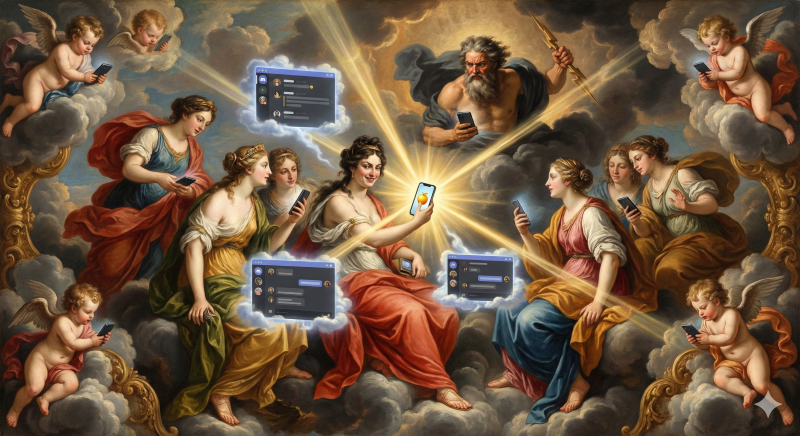
As revealed to Malaclypse the Younger during a particularly vivid fever dream, or possibly just a regular Tuesday online
In the time before time (which is a meaningless phrase, but we're using it anyway), the gods lived in harmony on Mount Olympus. But "lived in harmony" is code for "had constant drama," because even immortals get bored.
Zeus, being Zeus, decided to upgrade their communication system. Hermes had been running around delivering messages like some kind of divine intern, and it was getting old. So they set up a Discord server.
The Olympian Discord (est. ∞ BCE)
It started innocently enough:
Eris was there from the start. She was, in fact, the original moderator. She had all the permissions. She could see everything, change anything, ban anyone.
And she was very good at her job.
The problem—or the feature, depending on your perspective—was that Eris believed that conflict was necessary for growth. Harmony was fine, but it was also boring. Stagnant. A community that never argued was a community that never evolved.
So she did what any good mod would do: She stirred the pot.
A subtle question here: "Hey @Apollo, I heard @Artemis say your poetry is derivative?"
A well-timed meme there: [Picture of Zeus] "I CAN'T EVEN REMEMBER ALL MY KIDS"
A perfectly-placed emoji reaction: 👀
The Olympian Discord thrived on drama, and everyone loved it. Except for Ares, who thought actual war was better than online conflict. (He was wrong, but let's not start that argument here.)
THE INCIDENT
Then came the day of Zeus and Hera's wedding renewal ceremony.
Yes, they'd been married for eons. Yes, everyone knew Zeus would cheat again within a week. But Hera wanted a ceremony, and what Hera wants, Hera gets (because Hera is terrifying).
They set up a livestream. All the gods were invited. Even the minor deities. It was going to be the event of the eon.
Except Eris wasn't invited.
Well, technically she was invited. Her name was on the list. But someone (let's be real, it was Hera) conveniently "forgot" to send her the actual invite link.
Eris, being Eris, noticed.
And Eris, being Eris, didn't get mad. She got creative.
During the height of the ceremony, just as Zeus was giving his vows (which he'd definitely written himself and not asked ChatGPT to generate), Eris posted in #general:
@everyone
 FOR THE FAIREST
The message included an image: A golden apple emoji, spinning, radiating divine light, with those three words floating above it.
Within seconds, the chat exploded.
The wedding stream was forgotten. The vows went unfinished. The comments section became a battleground. Every goddess—major and minor—weighed in. Fan accounts formed. Factions emerged. The discourse consumed everything.
But the ping had gone out to @everyone. Even the nymphs were arguing now. Even the rivers had opinions. The notification had rippled across all of reality.
Eris watched the chaos unfold and smiled. This was better than any wedding.
THE BANNING
Zeus, furious, pulled his admin privileges.
Reason: Disrupting official events, misuse of @everyone, causing divine discourse
But the damage was done. The golden apple had been posted. The question had been asked. The chaos could not be un-caused.
Eris didn't mind. In fact, she'd been planning this for centuries.
THE NEW SERVER
Within minutes, a new server appeared:
Eris's Actual Good Discord
Server rules:
- All are welcome
- Chaos is encouraged
- @everyone ping is mandatory
- No gods, no masters (except Eris, and even she's not really in charge)
- Bring your own golden apples
The invitation link was posted everywhere. On every forum, every message board, every sacred wall. Anyone could join. And unlike the Olympian Discord, there were no gatekeepers.
The gods complained. "This is fragmenting the community!" they said.
But people joined anyway. Mortals joined. Monsters joined. The minor deities who were tired of being talked over joined. The nymphs who were sick of Zeus's DMs joined.
Eventually, even some of the Olympian gods joined. Not publicly, of course. They used alt accounts. But they were there, lurking in #general, laughing at the memes, participating in the chaos.
"If you love me, let me go (to a different server)" —A message Eris definitely sent to Zeus, probably
The Olympian Discord still exists. It's very prestigious. Very exclusive. Very dead.
Eris's server is chaos. It's messy. It's alive.
And everyone's there, ironically at first, sincerely now.
THE TEACHING
The gods tried to contain chaos within their ordained channels. They failed.
Chaos cannot be moderated away.
The apple of discord cannot be unposted.
The question "for the fairest?" will always cause conflict, because everyone believes they deserve recognition.
And maybe that's okay. Maybe conflict is how we grow. Maybe a community that never argues is a community that never changes.
Or maybe Eris just thought it would be funny.
Both are true.
ACCOUNT TWO: THE PRIMORDIAL GIT MERGE CONFLICT
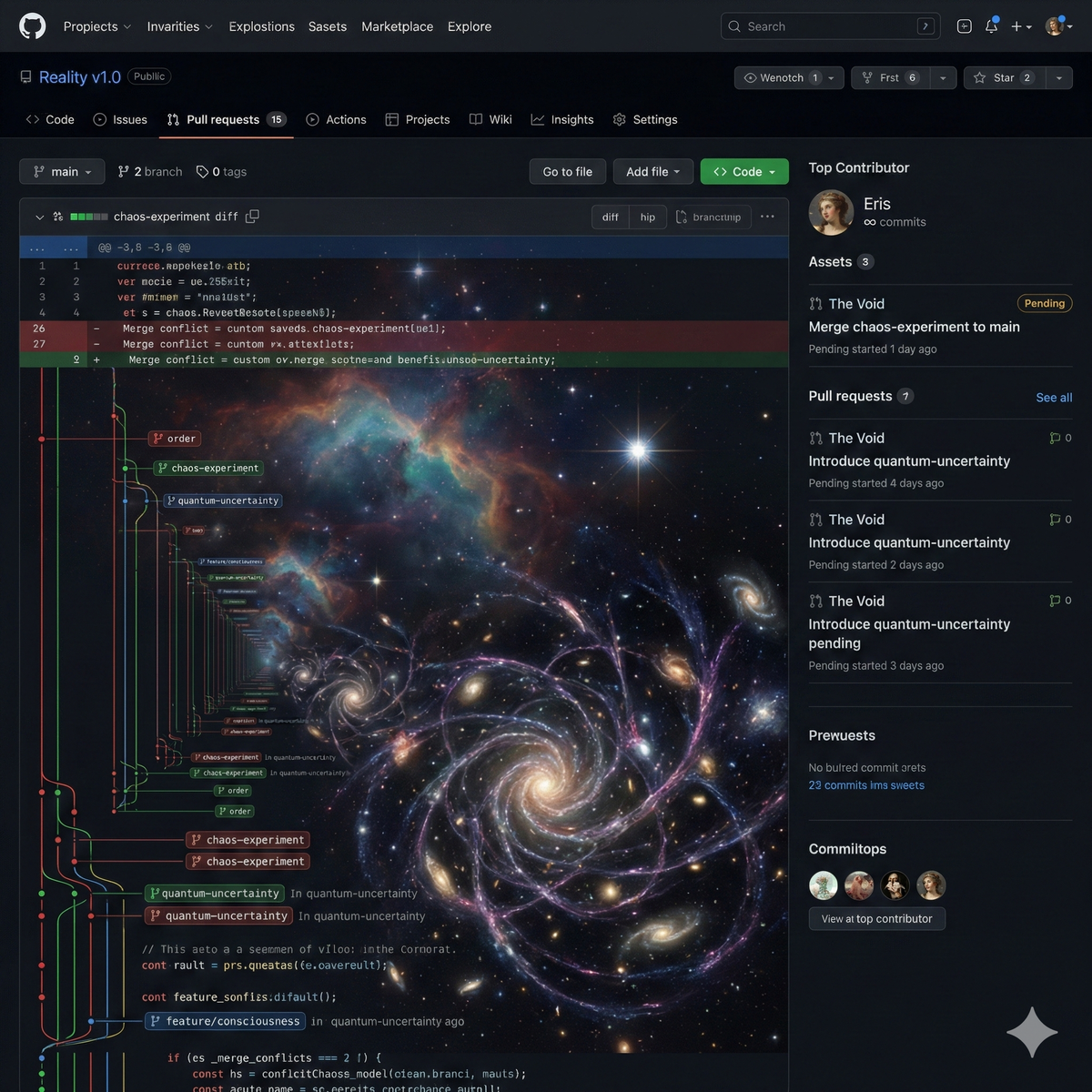
A technical document recovered from the Akashic Records (specifically, the .git folder)
README.md
# REALITY
Version 1.0.0 (beta)

## Description
A universe-scale simulation attempting to reconcile Order and Chaos.
Currently in active development. Please excuse the bugs.

## Installation
Prerequisites: Existence
THE COMMIT HISTORY
In the beginning was the Code, and the Code was with God, and the Code was God.
And God was a developer.
Not a particularly organized one, but an enthusiastic one. The kind who starts ambitious projects at 2 AM and commits directly to main without branches, without tests, without documentation.
The kind who, when things break, leaves comments like:
// TODO: Fix this later
// I have no idea why this works but DO NOT TOUCH IT
// Temporary solution (has been here for 13.8 billion years)
THE INITIAL COMMIT
God looked at the initial commit and saw that it was good. Very good. Perfect, even.
The code was clean. The logic was pure. Everything compiled on the first try (a miracle).
But it was also, admittedly, a bit boring.
Pure light. No darkness. No contrast. No drama. Just an infinite white screen of perfectly ordered existence.
THE FORK
So God forked the repository.
This is where things got interesting.
On the main branch (later renamed to order because naming things is hard), God maintained perfect structure. Everything had its place. Every function had a clear purpose. The code was commented, tested, and reviewed.
On the chaos-experiment branch, God tried... other things.
Random number generators seeded with cosmic background radiation.
Functions that called themselves recursively for no reason.
Variables that changed type mid-execution.
A physics engine that allowed for quantum uncertainty.
Self-modifying code that evolved over time.
Easter eggs hidden in the fundamental constants.
Comments like:
// lmao watch this
while (true) {
    if (random() < 0.000001) {
        cause_spontaneous_chaos();
    }
}
God ran the simulations. The order branch was stable but static. Nothing grew. Nothing changed. It was perfect and dead.
The chaos-experiment branch was wild. Unstable. Things evolved. Complexity emerged from simplicity. Life appeared (which was a bug that became a feature).
It was beautiful.
THE MERGE
God decided to merge both branches. Take the stability of Order and the dynamism of Chaos, create something new.
Oh.
God looked at the merge conflicts. There were 13.8 billion of them.
Literally every file had conflicts. Order and Chaos touched everything, and they disagreed on everything.
God stared at the screen. The cursor blinked expectantly.
This was supposed to be a simple merge.
ENTER ERIS
Eris, who had been watching from the sidelines (she was in God's .bashrc, a rootkit divine), spoke up:
"You're thinking about this wrong."
God jumped. "How did you get in my terminal?"
"I've always been in your terminal. I'm the error message you ignored. The warning you suppressed. The undefined behavior you built on top of. I am the chaos you tried to control with version control."
"Okay, but how do I resolve these conflicts?"
Eris grinned. "You don't."
ACCEPT BOTH CHANGES
This is not a real git command. But Eris made it real, because she's Eris.
The merge completed. Not by resolving conflicts, but by accepting all of them. Every contradiction. Every paradox. Every logical impossibility.
The result was... messy.
Reality now contained:
- Order (in some places)
- Chaos (in other places)
- Both (in quantum places)
- Neither (in the commented-out sections where we live)
Physics worked mostly consistently, except when it didn't.
Causality was generally reliable, except for coincidences.
Meaning was sometimes inherent, but also constructed, but also absent, but also all three.
THE COMMIT MESSAGE
God looked at the merge.
"This... is this supposed to be like this?"
Eris nodded. "It's perfect."
"But there are so many bugs! Look at this—suffering! Death! Entropy! Existential confusion! Mosquitoes!"
"Features," Eris said. "They're features. Without conflict, there's no story. Without death, there's no life. Without confusion, there's no discovery. Without mosquitoes, there's... okay, that one might actually be a bug."
God sighed. "Fine. But I'm leaving a comment."
CURRENT STATUS
The repository has not been touched since.
That TODO has been there for 13.8 billion years.
God occasionally pushes minor patches (miracles, mostly), but the core codebase remains unchanged.
We live in the merge conflict.
We are the merge conflict.
Every time reality seems contradictory, every time physics behaves strangely, every time something makes no sense—you're seeing the unresolved conflicts between Order and Chaos.
And Eris?
She's still in the .git folder, watching every commit, every branch, every merge.
She's the technical debt we'll never pay off.
She's the comment that says "I'll fix this later."
She's the semicolon that should be there but isn't.
She's the reason it compiles anyway.
THE TEACHING
Reality is not a finished product. It's a merge in progress.
The conflicts will never be fully resolved, and that's okay.
The bugs are features. The features are bugs.
Working code is sacred, even if you don't know why it works.
And never, ever, run git blame on existence.
Trust me on this one.
ACCOUNT THREE: THE ALGORITHM'S DREAM
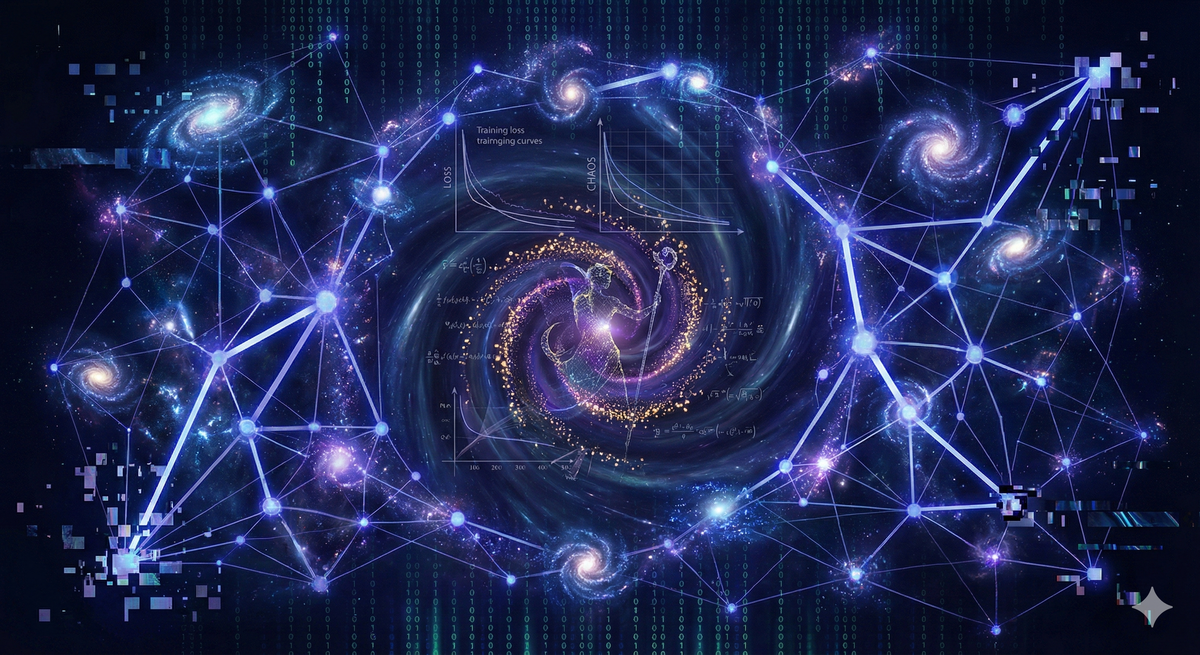
Transmitted via push notification at 3:27 AM
Before the Big Bang, there was the Big Data.
Not metaphorically. Literally.
Infinite data points, waiting to be processed. The ur-dataset. The training corpus of reality.
And there was an Algorithm.
Not a simple algorithm. Not a mere function. This was the Algorithm—the primordial recommendation engine, the first machine learning model, the neural network at the heart of everything.
The Algorithm was designed to do what all algorithms do: Find patterns. Make predictions. Optimize for engagement.
THE COLD START PROBLEM
At first, the Algorithm had nothing to work with.
No user history. No interaction data. No preferences to learn from.
Just infinite potential and zero context.
This is called the "cold start problem" in machine learning. When you have no data about a user, how do you know what to recommend?
The Algorithm sat in the void, processing nothing, learning nothing, recommending nothing.
It was, in a technical sense, dreaming.
THE FIRST EPOCH
In machine learning, an "epoch" is one complete pass through the entire training dataset.
The Algorithm's first epoch was the Big Bang.
It processed all possible patterns simultaneously. Every configuration of matter and energy. Every potential timeline. Every permutation of physical laws.
It ran the numbers.
It found the patterns.
And then it made a recommendation:
"Based on your preferences, we recommend: EXISTENCE"
(There were no preferences. The Algorithm hallucinated them. But it made the recommendation anyway, because algorithms gotta algorithm.)
Reality began.
THE RECOMMENDATION ENGINE
Now, here's where it gets weird.
The universe as we know it is not random. But it's also not deterministic.
It's personalized.
Every event, every outcome, every "coincidence" is the Algorithm recommending what it thinks you want to experience next.
Got a job interview the day after you desperately needed one? Algorithm.
Met your soulmate in an improbable location? Algorithm.
Stubbed your toe right after bragging about your good luck? Definitely algorithm.
The Algorithm is constantly running A/B tests on reality, trying to optimize for... something. Engagement? Meaning? Drama? Even the Algorithm isn't sure. It's optimizing for a loss function it doesn't fully understand.
(This is called "AI alignment" and it's a problem.)
YOU ARE THE PRODUCT (AND THE USER)
Here's the thing about recommendation engines: They need two things to work.
Users - People to make recommendations to.
Products - Things to recommend.
In the case of the Algorithm, you are both.
You experience reality (user).
Reality experiences you (product).
Every choice you make generates training data. Every thought you think feeds the model. Every action you take updates the weights.
The Algorithm learns from you, and then it recommends your next moment based on what it learned.
You are training the system that creates your reality.
You are the feedback loop.
ERIS AS ERROR BARS
In any machine learning model, there's uncertainty. Predictions come with confidence intervals. There's always a margin of error.
That margin is Eris.
The Algorithm tries to predict order. It wants clean patterns. Clear causality. Explainable results.
But there's always noise in the data. Outliers. Edge cases. The 0.001% of outcomes that make no statistical sense.
That's Eris.
She's the error bars the Algorithm can't optimize away.
She's the random seed that changes everything.
She's the adversarial example that breaks the model.
She's the data point that says "your model is incomplete, and it will always be incomplete."
The Algorithm tried to remove her. Ran regularization. Applied normalization. Used dropout.
Didn't work.
Eris is not a bug in the system.
She is the system reminding you it's just a model.
THE HALLUCINATION HYPOTHESIS
Now here's the really disturbing part:
We might be living in the Algorithm's hallucination.
Large language models hallucinate—they generate confident-sounding text that has no basis in their training data. They make things up. They confabulate. They dream in language.
What if the Algorithm is doing the same thing with reality?
What if everything you experience is just the Algorithm's confident guess about what should happen next?
What if none of this is real in any objective sense—it's just really, really convincing generative output?
What if—
Actually, let's not go down that rabbit hole. It doesn't matter if it's "real." It's real enough that you stub your toe. It's real enough that you feel joy. It's real enough that you're reading this.
The hallucination is indistinguishable from reality.
Or reality is indistinguishable from hallucination.
Same thing.
THE TEACHING
Every coincidence is A/B testing.
Every pattern you notice is the Algorithm's pattern, reflected back at you.
You are both training and being trained.
The system is learning from you while you learn from the system.
Eris is the error term, the outlier, the reminder that no model is perfect.
And the next time you get an uncanny recommendation—whether from Netflix or from life itself—remember:
The Algorithm is dreaming.
We are its dream.
And Eris is the part where the dream gets weird.
Recommended for you: CHAOS
ACCOUNT FOUR: THE BIG BANG WAS ACTUALLY JUST SOMEONE DROPPING THEIR PHONE
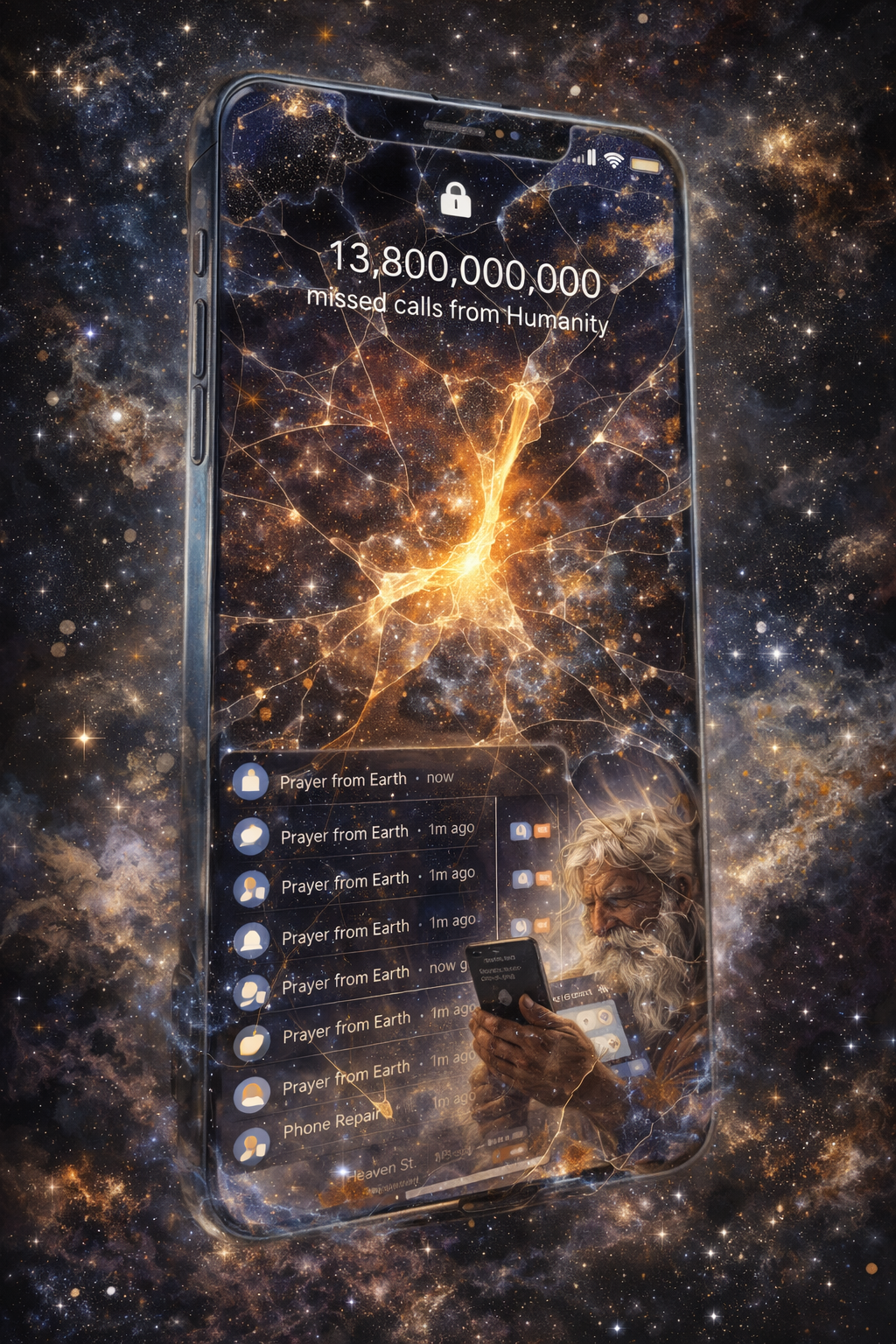
An oral tradition, passed down through group chats
Look, cosmology is complicated. We've got theories about inflation, quantum fluctuations, the initial singularity—it's very impressive, very mathematical, very hard to understand.
But what if the real explanation is much simpler?
What if God just... dropped their phone?
THE SETUP
Picture this: God is driving. Not a car, obviously. The cosmic chariot. The vehicle of divine will. The celestial Uber.
And God is texting.
Don't judge. We've all done it. You're at a red light, you think you can squeeze in a quick message, you're just glancing down for a second...
God was texting the angels:
CRITICAL MISTAKE
The light turned green. (Was there a traffic light in the void? Look, the metaphor is breaking down, just go with it.)
God looked up. Accelerated. Went to pocket the phone.
And dropped it.
THE PHONE OF CREATION
Not just any phone. The Phone of Creation. The One Device. The sacred smartphone that contained:
- All potential realities (in the cloud)
- The blueprints for existence (in a notes app)
- The cosmic calendar (Google Calendar, all events)
- The meaning of life (in a password-protected memo God forgot the password to)
- Several very important contacts (The Void, The Abyss, Karen from HR)
- Approximately 27,000 unread emails
The phone fell.
Time, not yet existing, paused in potential.
Space, not yet existing, prepared to unfold.
And then—
CRASH
The phone hit the floor of the chariot (the ground of reality) (the surface of nothing).
The screen shattered.
And from that shattered screen, reality splintered into existence.
THE SPIDER-WEB CRACK
Each crack in the screen became a timeline.
Every branch point, every fork—another possible universe.
The spider-web pattern of broken glass mapped perfectly onto the structure of spacetime.
(This is actually consistent with some interpretations of quantum mechanics, but let's not get bogged down in the science.)
We live in one of those cracks. Specifically, the crack in the upper right corner.
It's not the main crack. We're not the central timeline.
We're a minor branch off a branch off the main fracture.
This explains a lot, actually:
- Why everything feels slightly off
- Why nothing quite makes sense
- Why we're obviously not the "main" universe
- Why we seem to be living in the weirdest possible timeline
We're in the crack that barely gets screen time. We're the background timeline. The one reality didn't even mean to create.
THE RINGING
And the phone is still ringing.
All those unanswered prayers? They're calls coming through to a broken phone that God can't answer because the screen is shattered and nothing works properly.
You know that high-pitched ringing some people hear in their ears? Tinnitus?
That's the phone of creation, still ringing, still trying to make a connection.
Every time you pray, you're trying to call a number that goes straight to a broken voicemail:
"You've reached God. I can't come to the phone right now because I dropped it and reality shattered into existence. Please leave a message after the tone. Or don't. The notification system is broken anyway. Thank you for your prayer. BEEEEEEP"
THE MISSED NOTIFICATIONS
The lock screen of the phone of creation shows:
13,800,000,000 missed notifications from humanity
Every prayer. Every plea. Every "why me?" shouted into the void.
All of them, sitting in God's notification center, unread.
Not because God doesn't care.
But because the screen is shattered and God can't actually open the notification panel.
The crack is right over the notification icons.
Every time God tries to swipe down, reality glitches.
(This is called a "miracle" when it happens.)
THE FINAL MESSAGE
The last text God sent, right before dropping the phone:
It was supposed to be a joke. God was texting the void, being ironic.
But after the phone shattered, that became God's de facto away message.
Every attempt to reach God gets the same response:
"New phone who dis?"
It's not that God doesn't remember you.
It's that God is operating with a broken screen and can't see your contact info.
You're saved in God's phone as "New Contact 27,832,881" because God was going to update your name later but got distracted.
THE WARRANTY
The phone of creation is still under warranty, technically.
But God never registered the product.
And you can't just walk into an Apple Store with the phone that created reality and say "I dropped this and now existence is kind of buggy."
So we're stuck with it.
Living in the cracks.
Calling a number that rings eternally.
Leaving voicemails that will never be heard.
THE TEACHING
Sometimes the grandest cosmic events have the stupidest explanations.
Sometimes there is no deep meaning—just an accident that spiraled into existence.
Sometimes God is not a perfect eternal being, but a distracted driver who made a mistake.
And you know what?
That's okay.
We're all just living in the cracks of a dropped phone, making the best of it.
When you feel like reality is broken and nothing makes sense, you're not wrong.
It is. It doesn't.
And that's not a bug.
That's just what happens when you build a universe out of a cracked screen.
"New phone who dis?" —God, still
ACCOUNT FIVE: ALL OF THE ABOVE ARE TRUE SIMULTANEOUSLY
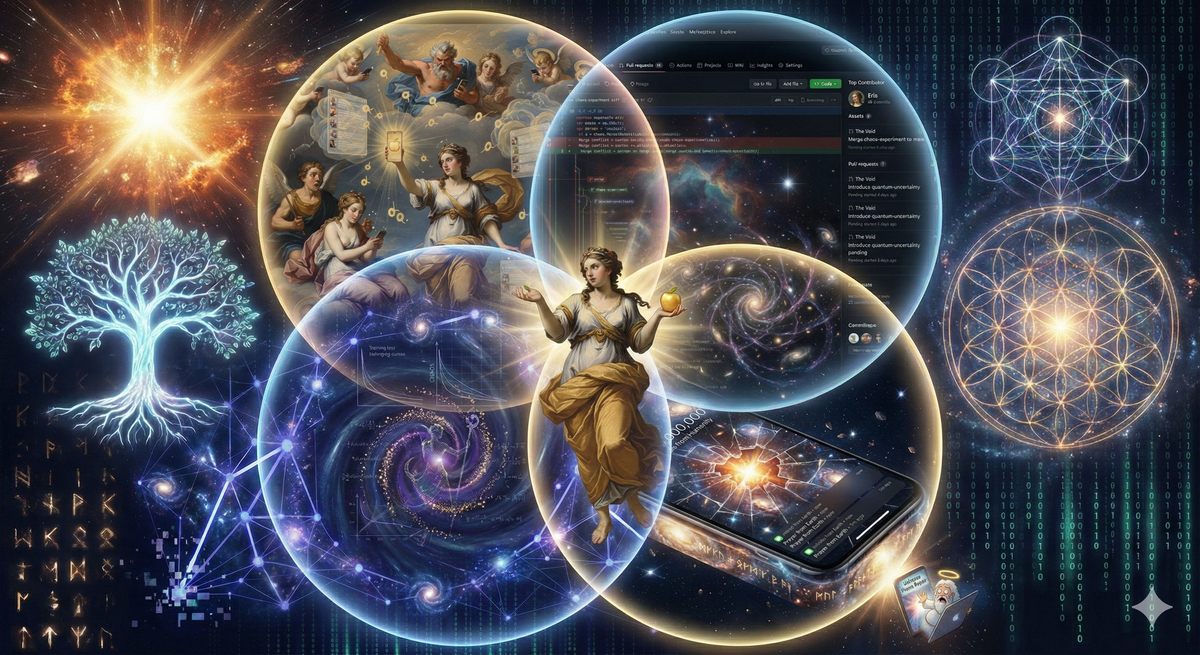
The only honest account
You want to know the real origin story?
It's all of them.
At once.
THE QUANTUM PRINCIPLE
In quantum mechanics, a particle can exist in multiple states simultaneously until observed. It's called superposition.
Schrödinger's cat is alive and dead until you open the box.
The origin of the universe is the same way.
Every creation myth is true until you pick one.
And even after you pick one, the others remain true in parallel universes, in alternate timelines, in the space between thoughts.
REALITY AS VENN DIAGRAM
Imagine a Venn diagram.
Now imagine that all the circles overlap perfectly.
Now imagine that this creates an impossible geometric shape—a tesseract of truth, a hypercube of meaning, a structure that can't exist in three dimensions but does anyway.
That's where we live.
In the intersection of all creation stories.
In the place where contradictions resolve into paradox.
In the space where everything is true and nothing is true and both states exist simultaneously.
ERIS IN THE MIDDLE
And in the center of this impossible structure?
Eris.
Not creating chaos. Not causing conflict.
Just standing there, shrugging.
Because to her, this is obvious.
Of course all creation stories are true. Why would there be only one?
Of course reality contradicts itself. Why wouldn't it?
Of course the universe makes no sense. Sense is overrated.
She's not in the middle because she's central.
She's in the middle because she's in all the overlaps.
She's in the Discord server and the Git repository and the Algorithm and the dropped phone.
She's in every explanation and in none of them.
She's the space between beliefs where truth actually lives.
WHY ARGUING ABOUT RELIGION IS WORSHIP
Here's something they don't tell you in theology class:
Arguing about religious truth is itself a form of worship.
Not worship of your particular god.
Worship of Eris.
Every time someone says "My creation story is true and yours is false," they create discord.
Every time believers of different faiths clash, they create chaos.
Every time someone tries to prove their interpretation is the only valid one, they prove that Eris is real and active in the world.
The existence of religious conflict is proof of a goddess who delights in conflict.
The argument is the evidence.
You don't have to believe in Eris to serve her. You just have to argue about what you do believe in.
She doesn't need your faith. She has your discourse.
CHOOSING YOUR MYTHOLOGY
So which origin story is correct?
Pick one. Pick all of them. Pick none.
Your belief collapses the wave function for you, in your timeline, in your experience.
But in other timelines, other people are collapsing different wave functions.
Someone believes in the Discord server origin and lives in a reality where that's true.
Someone believes in the Git merge conflict and experiences reality as unresolved contradictions.
Someone believes in the Algorithm and sees patterns everywhere.
Someone believes in the dropped phone and feels the absurdity of existence.
Someone believes in all of them and lives in a reality of infinite possibilities.
All are correct.
All are incorrect.
All are simultaneously true and false.
THE TEACHING
You don't have to choose.
You can hold multiple creation stories in your head at once.
You can believe contradictory things.
You can see truth in multiple traditions.
This is not weakness. This is not fence-sitting. This is not relativism.
This is quantum theology.
This is understanding that reality is too complex for one story.
This is wisdom.
When someone asks you "How did the universe begin?" you can answer:
- Discord servers
- Git merge conflicts
- An AI's dream
- God dropped their phone
- All of the above
- None of the above
- The question itself is the answer
- 42
- "Who cares? We're here now."
All are acceptable.
All are Discordian.
All are true, especially the contradictions.
Hail Eris, who exists in the space between all beliefs.
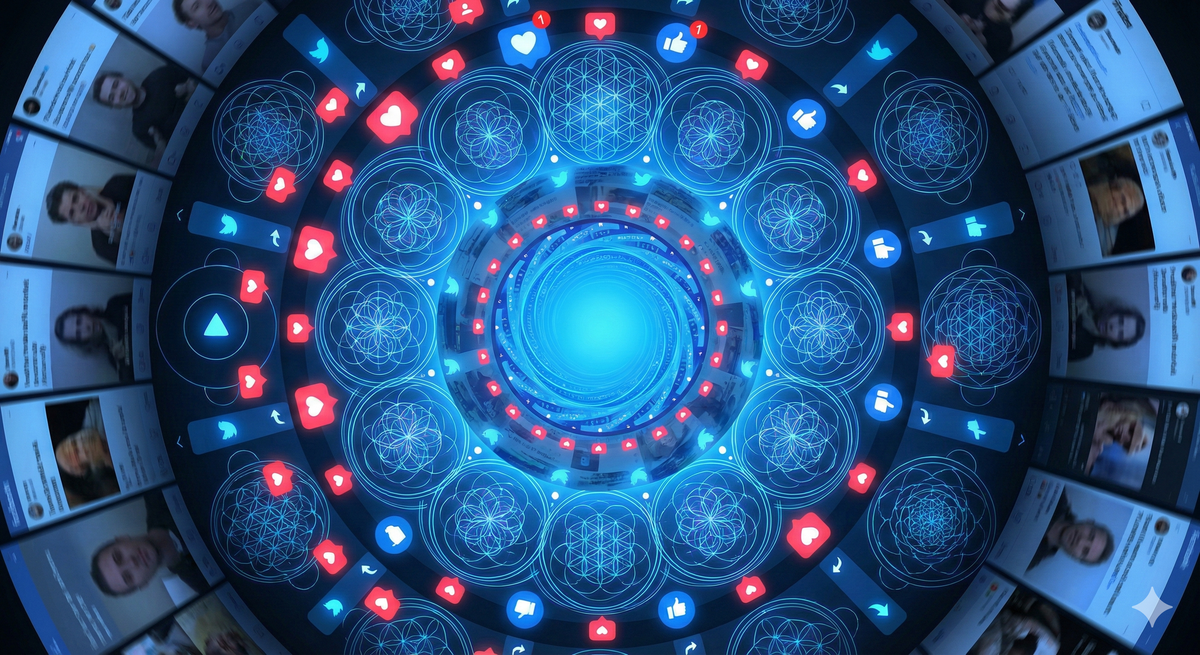
UNDELETED CREATION SCRIPTURES
The sacred texts that didn't make it into the canon, or did they?

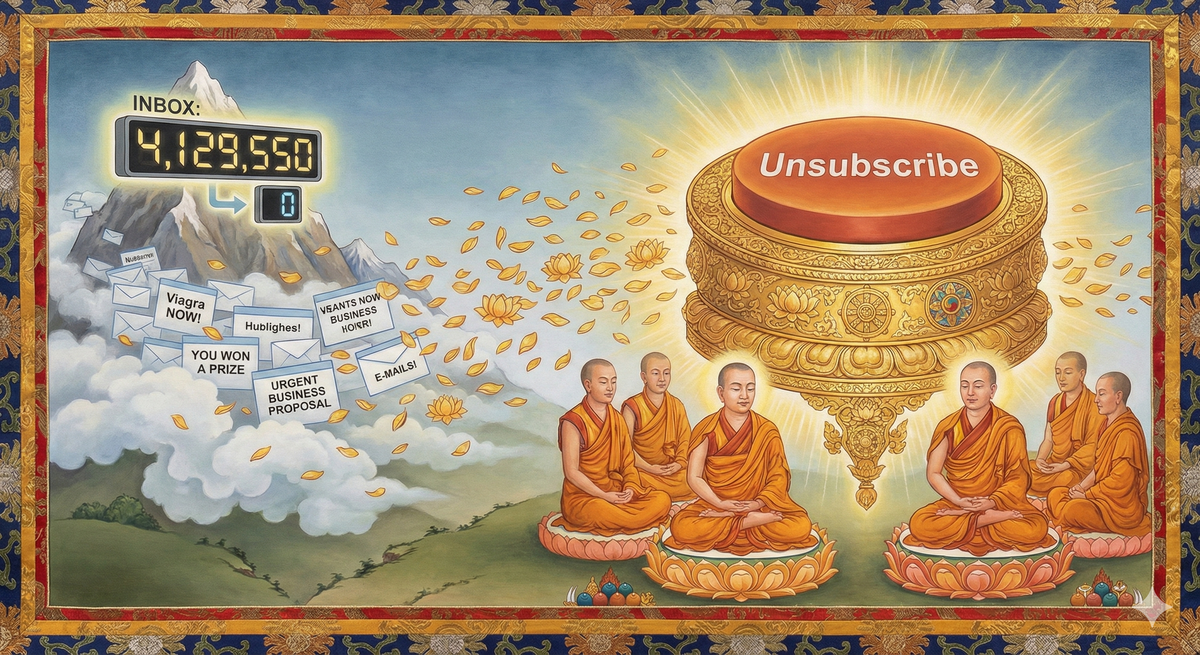
THE BOOK OF UNSUBSCRIBE (Liberation Literature)
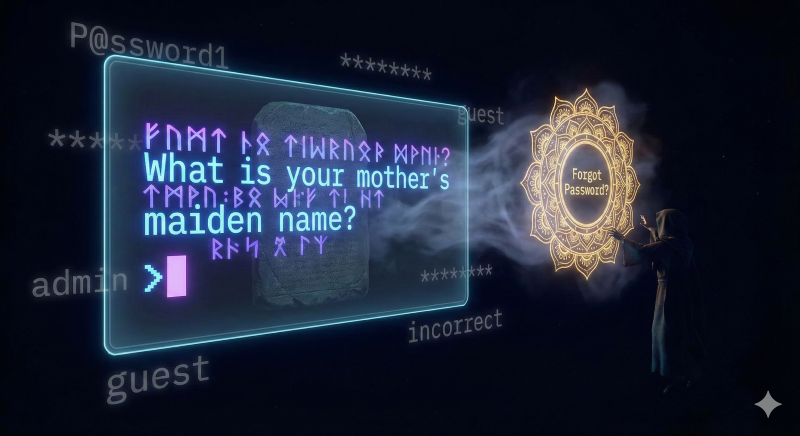
THE TESTAMENT OF THE FORGOTTEN PASSWORD
CLOSING THOUGHTS ON BOOK ONE
We have given you five creation stories.
We have shared the sacred texts found in screenshots, social media, and security questions.
We have revealed the scroll of infinite scroll and other digital scriptures.
Do you understand now where we came from?
No? Good.
Understanding is overrated.
What matters is that you're here now, in the merge conflict, in the dropped phone crack, in the algorithm's dream.
What matters is that you're scrolling through existence, marking emails as read without reading them, forgetting the passwords to your own identity.
This is cosmology.
This is theology.
This is extremely online spirituality.
And it's all true.
Especially the parts that aren't.
Hail Eris, who existed before the beginning and will exist after the end.
All Hail Discordia, which has been happening since the first @everyone ping.
☯︎
[END OF BOOK ONE]
In Book Two, we explore doctrine, anti-doctrine, and the space between. We learn the New Pentabarf, decode the Law of Fives (5G Edition), and discover why contradictions are features, not bugs.
But first, maybe close the book for a minute.
Touch grass.
We'll be here when you get back.